
Lakewood City Directory Collections
There is no single shelf that can be called the complete Lakewood run. Denver Public Library’s Western History materials are the main directory source, and the collection spans printed, microfilm, digital, and street-order formats. Jefferson County Public Library adds genealogy databases and newspaper access. The table separates actual coverage from a claim that every volume includes every Lakewood address.
| Collection | Years or publisher | Where held | Access and people fields |
|---|---|---|---|
| DPL Denver volumes | Microfilm 1866 to 1981; digital 1873 to 1923; Polk volumes include 1899, 1913, 1960 to 1996 | DPL Western History, digital, Ancestry | Name, address, occupation, household and business clues; locality check needed |
| Householder and Criss-Cross | 1924 to 2018; digital 1924 to 1937 | Denver Public Library | Address-to-householder or occupant lead; street order |
| Lakewood telephone books | May 1995/96 through June 2009 index | DPL STX-2 | Subscriber, address, and phone fields as holdings permit |
| Green Mountain Presbyterian register | 1893 to 1900; revised or transferred in 1904 | DPL C MSS WH1023, box 8 | Membership and communicant names and dates |
| JCPL genealogy and newspapers | Database-specific runs; Plains to Peaks 1859 to 1924 | Jefferson County Public Library | Census, probate, obituary, military, directory and newspaper leads |
| Heritage and county archives | Catalogs back to 1859; selected current and historical material | Heritage Lakewood and Jeffco Archives | Photos, objects, oral histories, tax, maps, government and people records |
The year ranges describe holdings, not guaranteed Lakewood coverage. A Denver volume may list an address under Denver-area, county, township, or another locality label. Record the title, publisher, year, page, and locality before using the entry as evidence.
Where Lakewood City Directory Shelves Lead
The DPL directory collection is the best first stop for name, occupation, address, owner or resident, and business searching. Its building-history guide explains how printed city directories, street-order volumes, Sanborn maps, permits, and ownership records fit together. DPL offers digital results and physical or microfilm routes, but the precise access method depends on the year.
Jefferson County Public Library’s genealogy page supplies HeritageQuest, in-library Ancestry Library Edition, MyHeritage, HeritageHub, FamilySearch, Plains to Peaks Historic Newspapers, and DPL Western History links. Ancestry Library Edition is an in-library route. Reference staff can help distinguish an obituary, directory lead, census record, and certified vital record.
For a view of local-history work and its nonprofit setting, use the Lakewood Historical Society source page. The Jefferson County Public Library genealogy page is the source shown in the library image and the route to its dated database and reference leads.
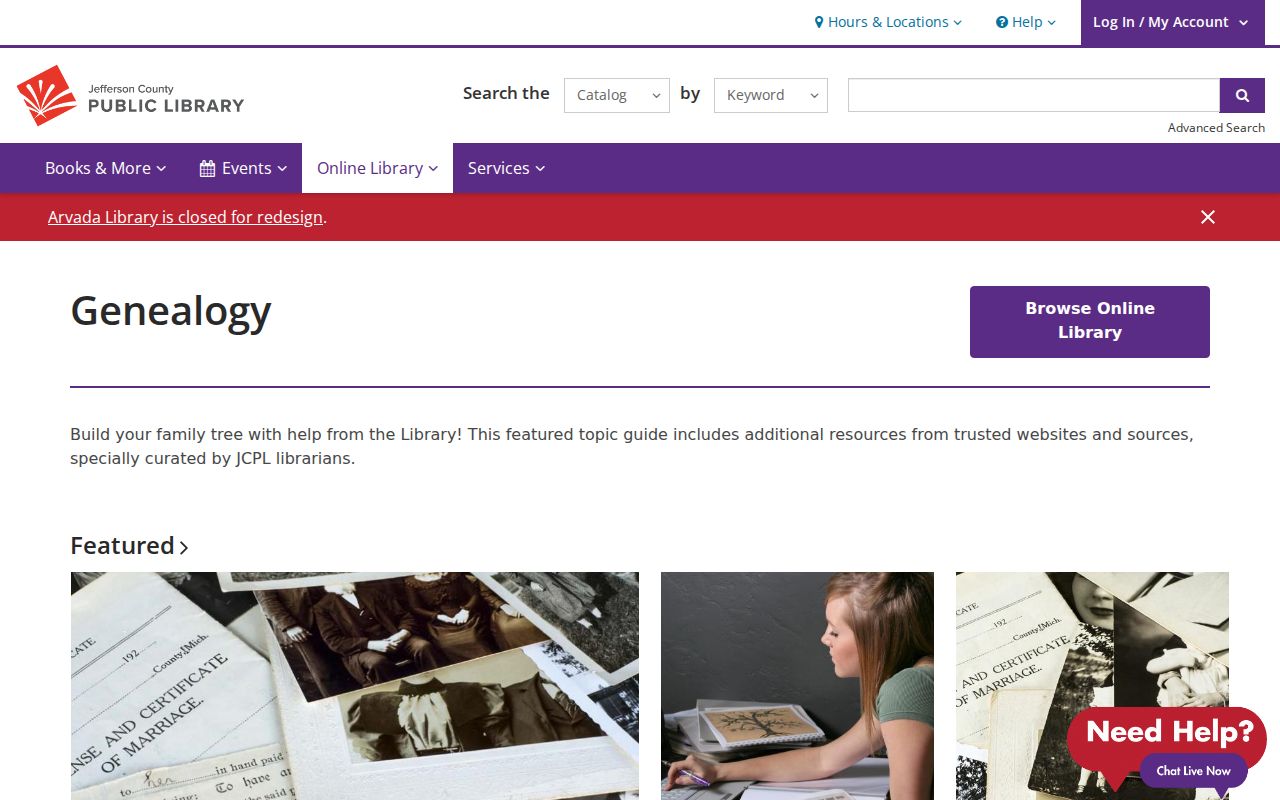
The library image belongs with the access discussion because a database tile, a microfilm reel, and a reference request are different ways to reach a dated lead.
Reading a Lakewood City Directory Entry
A city directory entry is compact, and its marks vary by publisher. The actual 1884 Corbett and Ballenger volume inspected for research is a 795-page Denver city directory with inhabitants, firms, a street directory, cemeteries, officials, schools, churches, organizations, street changes, and advertisements. It is a real volume, but a person-specific Lakewood entry was not selected. Use the entry fields as a guide, not as a claim that Lakewood appears in every year.
| Name | Head or householder name; a spouse may appear in parentheses. |
|---|---|
| Address | House number and street, with a locality or ward label. |
| Occupation | Work description or firm connection when the volume prints one. |
| Household note | Spouse, widow, forwarding, death, partner, or related mark when defined. |
| Street section | Address-order material that can expose nearby entries and street variants. |
- Criss-cross directory
- A street-order section that turns a house number into a householder or occupant lead.
- Householder index
- An address-based index centered on the person or household tied to a property.
- Abbreviation key
- Front matter that explains short marks, officials, wards, schools, churches, and street changes.
Photograph or transcribe the abbreviation key first. A small mark can change whether an entry points to a residence, a boarder, a business, or a forwarding note.
Lakewood’s 1884 Directory Clue
The 1884 Corbett and Ballenger volume has a 784-page companion from 1883. Its scale is a useful reminder that a directory is a historical book, not a modern database. Search by page, scan nearby entries, and note the publication title and publisher. A result can be useful even when its locality line says Denver area rather than Lakewood.
Front matter can reveal city officials, council wards, schools, churches, organizations, street changes, and advertisements. Those details help explain why a name or address shifts between volumes. They can also point to a related newspaper or institution collection. Do not silently modernize the locality label.
The DPL digitized directory search is the appropriate place to inspect the dated volume record. The Lakewood Historical Society source supplies the local-history context shown in the accompanying image.
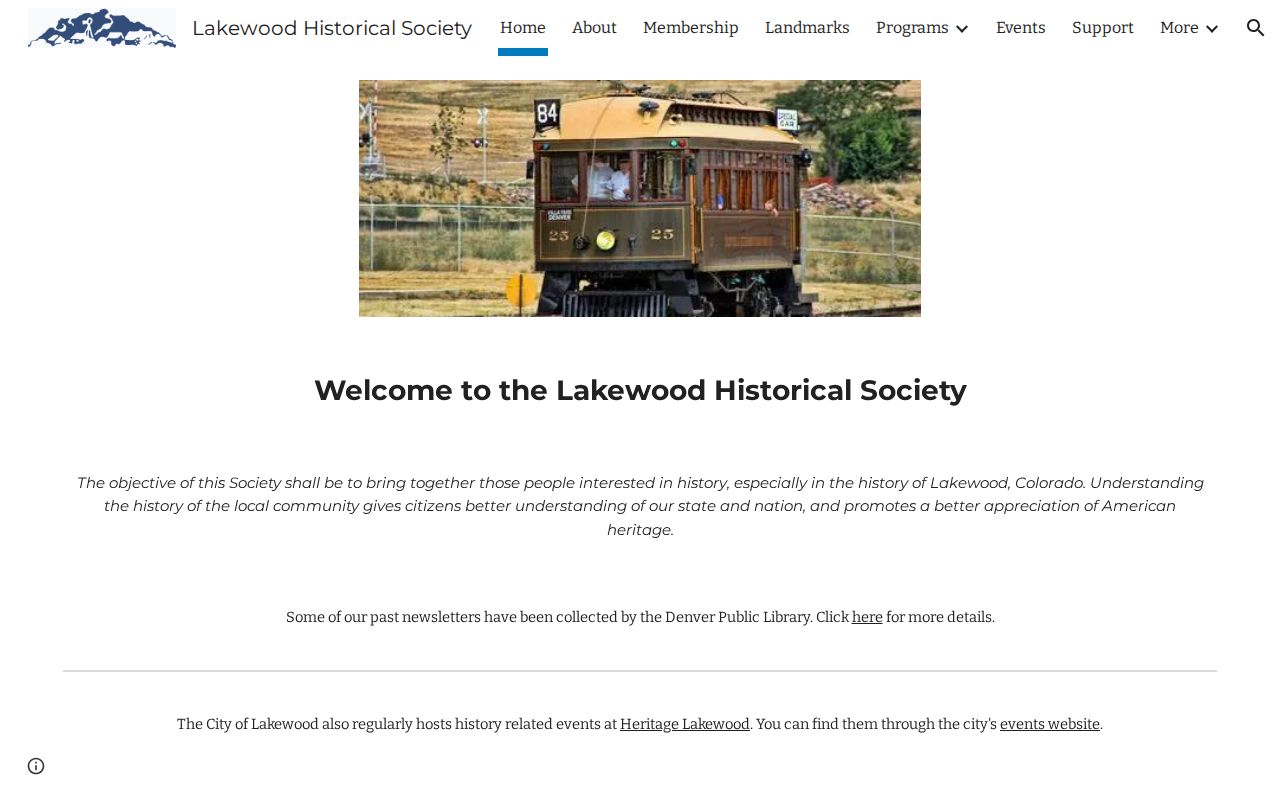
The historical-society image adds local context, while the digitized volume supplies the page-level directory evidence.
Lakewood Householder and Criss-Cross by Street
The DPL Householder and Criss-Cross collection covers 1924 to 2018, with digital coverage reported for 1924 to 1937. It is the historical address route. Start with the house number and street, read nearby entries, and check the next volume for a move, spouse note, forwarding mark, or changed street form. If the volume defines owner or householder marks, preserve that definition rather than applying a symbol by guess.
This street-order material complements, but does not replace, the modern Jefferson County assessor and GIS route. A historic address can have a different locality, ZIP, parcel number, or legal description. The Lakewood by-street page handles the modern address chain; the city directory collection remains the place to read the historical shelf.
Lakewood Telephone Books in STX-2
The Colorado Directories Index at DPL lists Lakewood telephone books in STX-2 from May 1995/96 through June 2009. The scope also includes Applewood, Bear Valley, Edgewater, Golden, Green Mountain, and parts of southwest Denver and Wheat Ridge. That multi-community span is a key locality warning. A subscriber or phone entry should be checked against the exact city and address line.
Telephone books can bridge a recent historical gap, but the available field is a subscriber record, not a complete list of people in a household. Treat the index as a library holding lead. Confirm the edition, page, and locality with DPL rather than assuming every annual book is on an open digital shelf.
Lakewood Green Mountain Presbyterian Names
The Green Mountain Presbyterian or First United Presbyterian Church of Lakewood membership and communicants register is a rare local people-history source. DPL identifies it as collection C MSS WH1023, box 8. The register covers 1893 to 1900 and has revised or transferred entries in 1904. A name, date, or transfer note can connect a family to a place when a general directory is silent.
This is a manuscript collection, not a current congregation roster. Ask DPL for the collection and box reference, then cite the register page or entry. Pair the result with a census, newspaper, cemetery, probate, or deed source. A church record can identify membership or participation, but it does not by itself establish a legal address.
Lakewood Heritage Photos and Oral Histories
Heritage Lakewood’s Museum Collection page reports more than 33,000 objects and more than 9,000 historical photographs, with selected objects and images online. Its research room is free on Tuesdays from 10 to 4, staff can help with digitized information and oral histories, and reservations are listed at $5 per hour. Copy fees vary. A 2026 city announcement describes a CatalogAccess launch reporting 44,000 artifacts. These figures have different dates and scope.
Jefferson County Archives adds catalog and digital material back to 1859, including maps, photographs, government, tax, assessment, and people collections. Non-digitized material may require a reference appointment. The State Archives finding aids identify Jefferson naturalization, probate, and court series. These places are valuable when a printed volume gives a name but no clear address bridge.
Lakewood Directory Time Markers
Dates help set expectations. The county archive catalog reaches to 1859, and Jefferson County was established in 1861. The church register supplies a local 1893 to 1904 people record. DPL directory and criss-cross runs begin on their own schedules. Appraisal photos can reach as early as 1949 in the archive description. Lakewood’s 2019 budget references microfilm-to-digital Laserfiche work, but it does not prove that a current public name search exists.
| Period | Verified clue | How it helps a directory search |
|---|---|---|
| 1859 to 1861 | Territory and county archive anchors | Search county and archive series before modern city labels. |
| 1893 to 1904 | Green Mountain Presbyterian register | Check a precise local manuscript collection. |
| 1924 to 1937 | Digital Householder and Criss-Cross | Search street order by address. |
| 1995/96 to 2009 | Lakewood telephone-book index | Bridge a recent historical window with locality caution. |
| 2026 | Heritage CatalogAccess initiative | Check new online object and image metadata. |
Trace a Household Through Lakewood City Directories
Use a directory as one dated point in a household trail. Start with the name or address you know, then test the same spelling, nearby street entries, and the locality label. Pair a directory year with the nearest census release, deed or tax record, obituary, cemetery entry, or archive photograph. If the name disappears, consider a move, death, change in listing practice, or an address outside the volume’s scope.
- Record the volume title, publisher, year, page, locality, and database or shelf.
- Find the name section, then read the address and any spouse, occupation, forwarding, or widow mark.
- Check the street-order section and nearby entries for a household or street change.
- Pair the dated entry with census, deed, tax, map, obituary, church, cemetery, or probate evidence.
- Write down the gap and the next custodian, whether DPL, JCPL, Heritage, Jeffco Archives, or the court.
The same method works for family history and house history, but the result should stay a lead unless two or more independent details agree. A modern owner or voter field can help verify a present-day question, yet the historical book remains the source for how the older entry was printed.